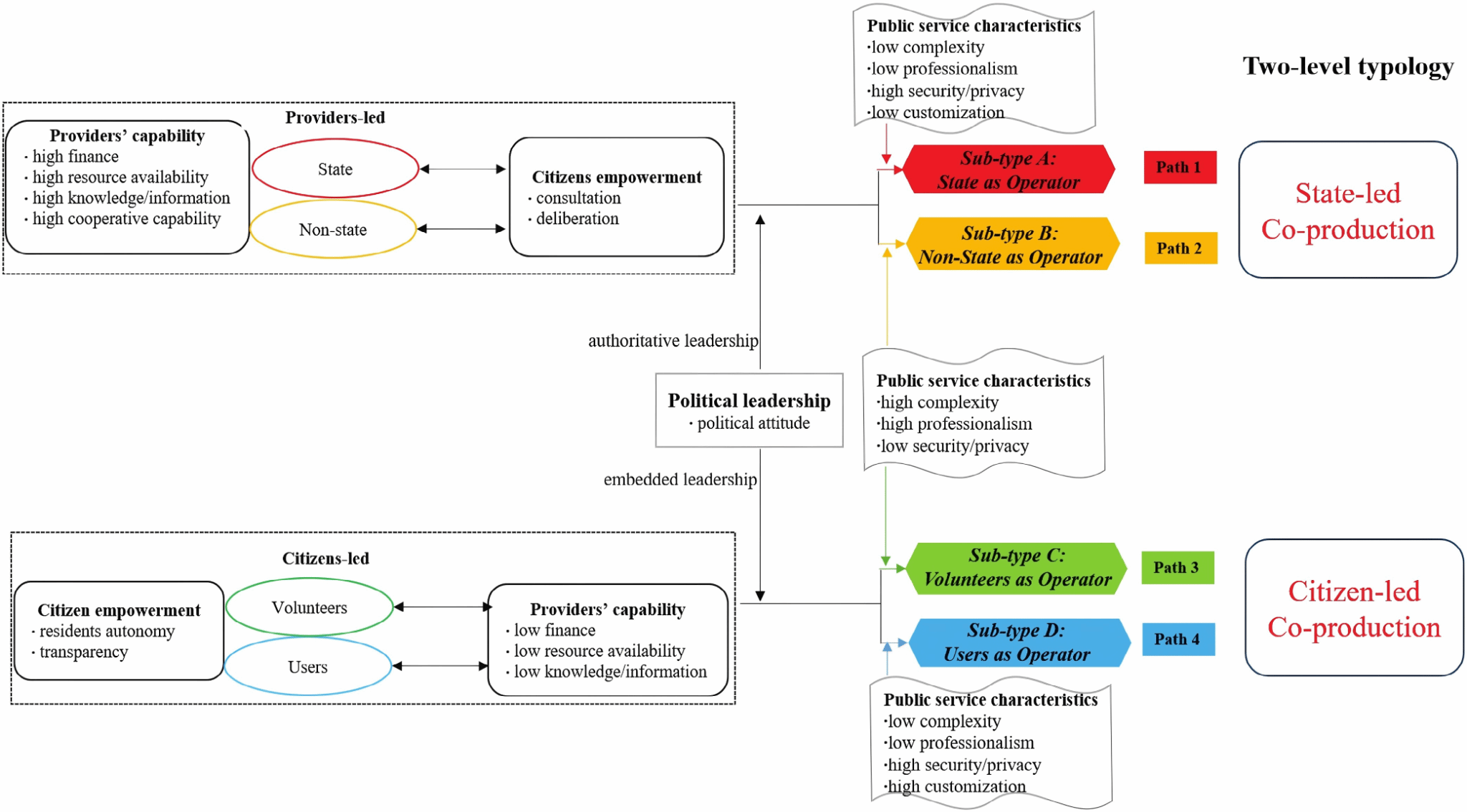
本研究通过探究治理路径的形成过程,剖析相关理论建构尚不充分的特定协同生产安排的生成机制。以上海 76 个社区更新项目为研究样本,本研究提炼出一套简约的双层类型学框架:政府主导型协同生产(含 A 型:政府作为运营主体、B 型:非政府主体作为运营主体)与公民主导型协同生产(含 C 型:志愿者作为运营主体、D 型:使用者作为运营主体)。研究发现,治理路径的生成取决于供给主体能力、公民赋权、政治领导力与公共服务特征之间的组态关系,折射出新韦伯主义国家、新公共管理及新公共治理范式所蕴含的多重逻辑。研究构建了组态权变分析框架,阐释治理逻辑如何在特定情境条件下被激活,将研究视角从静态类型清单转向动态治理路径。
This study addresses the under-theorized formation of specific co-production arrangements by exploring governance pathway formation. Using 76 community regeneration projects in Shanghai, we identify a parsimonious two-level typology: State-led co-production (comprising sub-type A: state as operator and sub-type B: non-state as operator) and Citizen-led co-production (comprising sub-type C: volunteers as operator and sub-type D: users as operator). Findings reveal pathway emergence is contingent upon configurations of providers' capabilities, citizen empowerment, political leadership, and public service characteristics, reflecting logics associated with Neo-Weberian State, New Public Management, and New Public Governance paradigms. The study shifts focus from static lists to dynamic governance pathways by proposing a configurational contingency framework that explains how governance logics are activated by specific contextual conditions.
Wang,Huanming and Bing Ran. 2026. “ How Were Governance Pathways Formed for Public Service Co-Production? A Contingency Perspective.” Public Administration 1–30. https://doi.org/10.1111/padm.70089.


